Understanding the Reggio Emilia Approach
The Reggio Emilia approach is an educational philosophy that originated in Reggio Emilia, Italy, and has been embraced worldwide for its child-centered methods that prioritize the interests and curiosities of students. At Pegasus International Preschool, we embrace this dynamic approach to early childhood education, believing that each child is a capable and resilient learner. By focusing on inquiry-based learning, our curriculum nurtures creativity and critical thinking, thus preparing children not just for academic success, but for lifelong learning. When exploring options, Reggio Emilia Preschool Singapore provides comprehensive insights into the incorporation of this philosophy in local contexts.
What is the Reggio Emilia Philosophy?
The Reggio Emilia philosophy is built upon the idea that children learn best when they are free to explore their environment and express their thoughts and feelings. This educational framework respects and values the child as a co-constructor of knowledge, engaging them in collaborative relationships with their peers and teachers. This process emphasizes experiential learning, whereby children gain an understanding of concepts through play and inquiry rather than rote memorization.
The Importance of Child-Centered Learning
In a child-centered learning environment like that at Pegasus, the curriculum is designed around the interests and needs of the children rather than adhering strictly to predetermined educational goals. This means educators actively listen to children’s questions and curiosities, facilitating a learning experience that is both engaging and relevant. By allowing children to direct their own learning, we empower them to take ownership of their educational journey.
How Inquiry-Based Learning Works
Inquiry-based learning is at the heart of the Reggio Emilia approach. It encourages children to ask questions, investigate topics deeply, and explore the world around them. Through hands-on projects and collaborative activities, children learn to form hypotheses, conduct experiments, and reflect on their findings, fostering a sense of curiosity that lasts a lifetime.
Key Benefits of a Reggio Emilia Preschool in Singapore
Choosing a Reggio Emilia preschool, such as Pegasus International Preschool, offers numerous advantages for holistic child development, especially within the context of Singapore’s multicultural environment. By fostering a rich learning atmosphere, we prepare children not only academically but also socially and emotionally.
Holistic Development and Lifelong Learning
The primary goal of a Reggio Emilia preschool is to support the holistic development of children. This approach nurtures not just the cognitive capabilities of young learners but also their emotional and social skills. By creating an environment where exploration is encouraged, children develop resilience, adaptability, and a passion for lifelong learning—critical attributes in today's fast-paced world.
Building Social Skills Through Collaboration
Socialization is a key component of the Reggio Emilia approach. Children are encouraged to work together on projects, which fosters teamwork and enhances communication skills. Through collaborative learning experiences, children are taught to respect others' opinions and work towards common goals, thus nurturing strong interpersonal skills.
Enhancing Creativity and Critical Thinking
Creativity is a cornerstone of the Reggio Emilia philosophy. Children are encouraged to express themselves through various mediums—be it art, music, or dramatic play. This creative expression enhances their ability to think critically and approach problems from multiple perspectives. By integrating arts into the curriculum, Pegasus International Preschool ensures that children do not merely learn facts but also develop the ability to innovate and think independently.
Curriculum Insights and Implementation
At Pegasus International Preschool, our curriculum design is influenced deeply by the principles of the Reggio Emilia approach. We integrate core academic subjects with arts and experiential learning, ensuring a comprehensive educational experience.
Curriculum Design Inspired by Reggio Emilia
The curriculum at Pegasus is flexible and evolves based on the children's interests. Teachers begin by observing the children to understand what stimulates their curiosity, which then guides the curriculum's direction. This ensures that learning remains relevant and meaningful to each child's experience.
Integrating Arts and Play in Learning
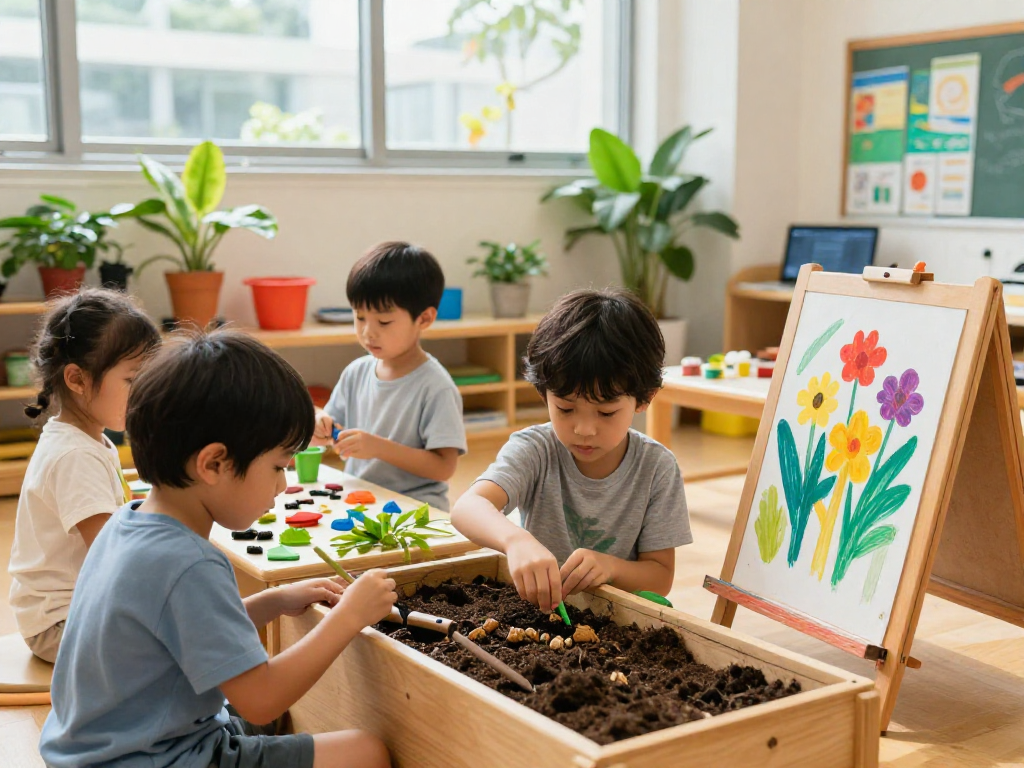
One of the standout features of a Reggio Emilia-inspired education is the incorporation of art and play. Children engage in creative activities that not only enhance their artistic skills but also develop their motor skills and cognitive understanding. This integration allows for a playful learning environment where lessons are engaging, and knowledge is constructed rather than transmitted.
Parental Involvement in the Educational Journey
Parental involvement is critical in the Reggio Emilia approach. At Pegasus, we believe that education is a collaborative effort between teachers, parents, and the community. We encourage parents to participate in classroom activities and provide feedback, which strengthens the home-school connection and fosters a supportive learning environment.
Challenges and Misconceptions in Reggio Emilia Preschools
Despite the advantages of the Reggio Emilia approach, there are common misconceptions that can lead to hesitancy among parents and educators.
Common Misunderstandings About Inquiry-Based Learning
One prevalent misconception is that inquiry-based learning lacks structure. In reality, this method incorporates guided exploration within a framework that provides balance between freedom and direction. Educators facilitate while allowing children to lead, ensuring that key learning objectives are still met.
Overcoming Resistance to Non-Traditional Learning Methods
Some may resist the idea of non-traditional learning due to fears about academic rigor or standardization. It is essential to understand that the Reggio Emilia approach equips children with foundational skills necessary for formal education and beyond. By nurturing a child's natural curiosity and enthusiasm for learning, we prepare them for ongoing educational success.
Ensuring Quality in Early Childhood Education Environments
Quality assurance in Reggio Emilia preschools is crucial for safeguarding children's development. This involves not only hiring qualified educators but also establishing a curriculum that meets the highest standards of early childhood education. Regular assessments and feedback mechanisms ensure that the learning environment remains conducive to growth.
Future Trends for Reggio Emilia Preschools in 2026
As early childhood education evolves, the Reggio Emilia approach is poised to adapt and thrive, with several trends emerging on the horizon.
Embracing Technology in Early Education
In an increasingly digital world, integrating technology into the Reggio Emilia framework presents new opportunities for learning. Educational tools that promote exploration and creativity can complement traditional methods, encouraging children's engagement with technology in a thoughtful and productive manner.
Cultural Diversity and Inclusion in the Classroom
As Singapore continues to grow as a multicultural society, Reggio Emilia preschools will emphasize cultural diversity as an opportunity for enrichment. Incorporating diverse perspectives and cultural narratives into the curriculum not only prepares children to navigate a global landscape but also fosters an appreciation for inclusivity and respect.
Preparing Children for an Ever-Changing World
The future of education must prepare children for a world that is constantly evolving. The Reggio Emilia approach, with its focus on adaptability, creativity, and critical thinking, is uniquely positioned to equip children with the skills they need to thrive, regardless of what challenges the future may hold.
What makes the Reggio Emilia approach unique?
The Reggio Emilia approach stands out due to its commitment to child-centered learning, which values the child’s perspective and encourages exploration and creativity. This model is particularly effective in nurturing holistic development in young learners.
How can parents support their child’s learning in preschool?
Parents play a pivotal role in supporting their child's learning. Engaging in discussions about school activities, providing opportunities for exploration at home, and communicating regularly with teachers can enhance the educational experience.
What role does the environment play in early childhood education?
In the Reggio Emilia framework, the environment is often referred to as the "third teacher." A well-organized, aesthetically pleasing, and stimulating environment encourages exploration and supports children's natural desire to learn.
How does the Reggio Emilia approach foster creativity?
By allowing children to express themselves through various forms of art and play, the Reggio Emilia approach nurtures creativity. This not only helps in developing artistic skills but also enhances problem-solving abilities and critical thinking.
Are there assessments used within the Reggio Emilia framework?
While traditional assessments may not align with the Reggio Emilia approach, educators use observations and documentation to assess children's progress. This qualitative assessment method highlights individual growth and supports personalized learning.